Contact lenses or glasses: which is better for you?
By See Better · Updated · 5 min read
The short answer
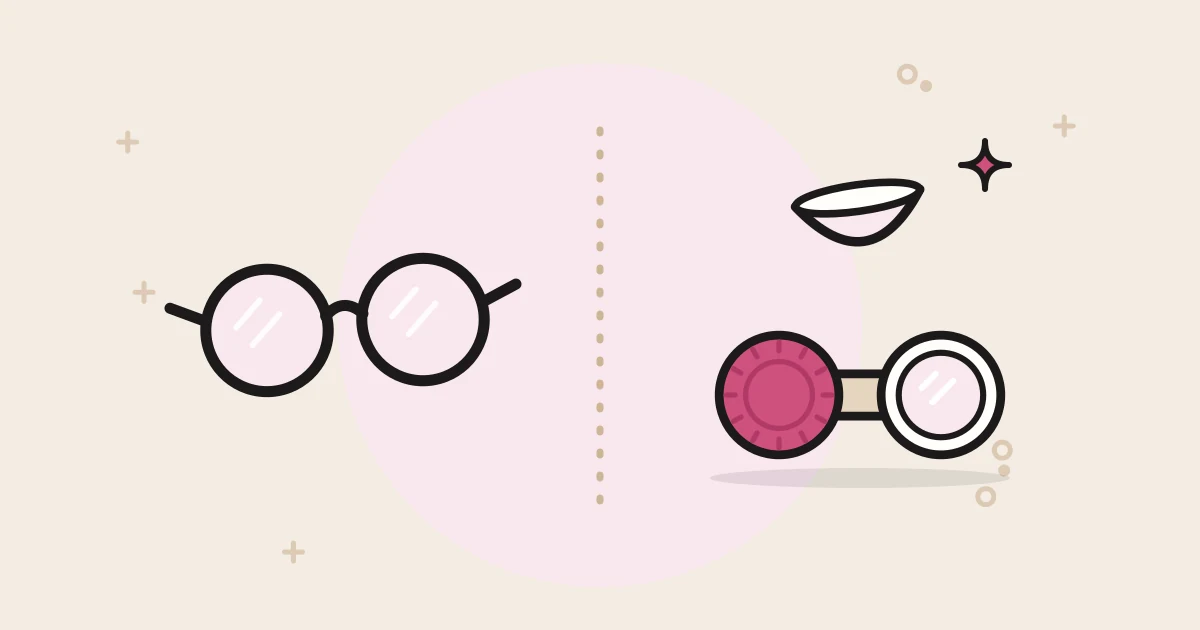
Neither is better for everyone. Glasses are simpler, cheaper over time and the lowest risk for your eyes. Contact lenses give a wider field of view and suit sport and an active life, but they need careful hygiene and cost more to keep up. Many people use both, with glasses at home and contacts when it suits them.
Key points
- Glasses are low maintenance and carry almost no risk to eye health.
- Contact lenses offer freedom and all-round vision, with strict hygiene rules.
- Never sleep, swim or shower in contact lenses unless your optometrist has said you may.
- Contact lens wearers still need an up-to-date pair of glasses.
Glasses and contact lenses compared
| Glasses | Contact lenses | |
|---|---|---|
| Field of view | Clear through the lens, with a frame at the edges | Natural all-round vision |
| Sport and exercise | Can slip, fog or break | Stay in place |
| Rain, steam and masks | Lenses fog and spot | No fogging |
| Daily effort | Put on, take off | Wash hands, insert, remove, clean or throw away |
| Eye health risk | Very low | Higher if hygiene slips |
| Dry or sensitive eyes | Not affected | Can make dryness worse |
| Cost over time | One purchase every two years or so | An ongoing cost for lenses and solution |
| Appearance | Part of your look | Invisible |
Reasons to choose glasses
- They are easy. There is nothing to learn and nothing touches your eye.
- They are the safest option. Glasses do not raise your risk of eye infections.
- They cost less in the long run. A good pair lasts about two years.
- They protect your eyes from wind, dust and, with the right lenses, UV light.
- They suit dry eyes and long screen days.
- They can do more than one job, with multifocal lenses, tints and coatings.
The drawbacks are familiar: they fog up, get rained on, slide down your nose during exercise and can be lost or sat on. Strong prescriptions can also make things look a little smaller or larger, and lenses can be thick at the edges.
Reasons to choose contact lenses
- A full field of view, with no frame in the way and no reflections.
- Freedom for sport, dancing and physical work.
- No fogging when you cook, wear a mask or walk in from the cold.
- More natural vision with strong or unequal prescriptions, because the lens sits on the eye.
- You can wear any sunglasses.
The drawbacks are the routine and the risk. Contact lenses must be handled with clean hands, replaced on schedule and, unless they are daily disposables, cleaned and stored properly. They can make dry eyes feel worse, especially in air conditioning and during long hours at a screen.
The safety rules for contact lenses
Contact lenses are safe when used as directed. Serious problems, such as infections of the cornea, nearly always follow a broken rule. The important ones are:
- Wash and dry your hands before touching your lenses.
- Never sleep in your lenses unless they were prescribed for overnight wear.
- Keep water away from them. Do not swim, shower or use a hot tub in lenses, and never rinse or store them in tap water.
- Replace lenses on schedule. A two-week lens is not a two-month lens.
- Use fresh solution every time. Never top up old solution.
- Replace the storage case every three months.
- Never share lenses or wear lenses that were not prescribed for you, including coloured fashion lenses.
If an eye becomes red, painful, sensitive to light or blurry while you wear contact lenses, take the lens out at once and see an optometrist or doctor the same day. Do not wait to see if it settles.
What contact lenses need that glasses do not
You cannot use your glasses prescription to buy contact lenses. Contacts need their own prescription, which includes the size and curve of the lens as well as the power, and they must be fitted and checked on your eye by an optometrist. How to read your glasses prescription explains the difference. Contact lens wearers should also have their eyes checked every year.
Why most people end up with both
Even committed contact lens wearers need glasses: for early mornings and late nights, for days when their eyes are tired or irritated, and as a backup if a lens tears or an eye needs a rest. An up-to-date pair of glasses is not optional for a contact lens wearer.
How to decide
Ask yourself:
- Do I play sport or work in conditions where glasses get in the way?
- Am I willing to follow a hygiene routine every day?
- Do my eyes often feel dry or irritated?
- What is my budget over a year, not just today?
- Do I like how I look in glasses?
If you are unsure, start with a good pair of glasses and try contact lenses later. Either way, the first step is the same: an eye test to measure your prescription and check that your eyes are healthy. See Better tests your eyes at home in Gauteng for R450. What happens during an eye test explains what to expect.
Frequently asked questions
Are contact lenses bad for your eyes?
Not when they are fitted by an optometrist and used as directed. The risk comes from poor hygiene, wearing lenses for too long, sleeping in them or exposing them to water, all of which raise the chance of a serious eye infection.
Can I sleep in my contact lenses?
Only if they were prescribed for overnight wear, and even then the risk of infection is higher. For ordinary lenses the answer is no, not even for a nap.
Are contact lenses more expensive than glasses?
Over time, usually yes. Glasses are a single purchase that lasts about two years. Contact lenses are an ongoing cost for the lenses, the solution and yearly checks, and you still need a pair of glasses as a backup.
At what age can you start wearing contact lenses?
There is no fixed age. It depends on whether the person can handle and clean the lenses responsibly. Many children manage well from around 10 to 12 with a parent's supervision, and an optometrist will advise in each case.
This article is general information and is not a diagnosis or a substitute for an eye examination. If you are worried about your eyes or your sight, see an optometrist or a doctor. Sudden loss of vision, eye injuries and severe eye pain are emergencies.