Digital eye strain and the 20-20-20 rule
By See Better · Updated · 5 min read
The short answer
Digital eye strain is the tired, dry, aching eyes, blurred vision and headaches that follow long periods at a screen. The simplest fix is the 20-20-20 rule: every 20 minutes, look at something 20 feet (6 metres) away for 20 seconds. A good screen position, regular blinking and an up-to-date prescription do the rest.
Key points
- The cause is how we use screens: close focus for hours, with far fewer blinks.
- 20-20-20: every 20 minutes, look 6 metres away for 20 seconds.
- Keep the screen an arm's length away, with its top at or just below eye level.
- If breaks do not help, an uncorrected prescription may be the real cause.
What digital eye strain is
Also called computer vision syndrome, digital eye strain is a group of symptoms that appear during or after long periods on a computer, phone or tablet. It is extremely common among office workers, students and anyone who works from home. It is uncomfortable but temporary, and it does not cause permanent damage to the eyes.
Symptoms
- tired, heavy or aching eyes
- dry, burning or gritty eyes
- watery eyes
- blurred vision, or slow refocusing when you look up from the screen
- headaches, usually across the forehead
- sensitivity to light
- a sore neck, shoulders or back
Symptoms build up through the day and ease after you have rested your eyes.
Why screens tire your eyes
- You blink less. A normal blink rate is about 15 times a minute. While concentrating on a screen it can fall to a third of that, and many blinks are incomplete. The tear film dries out. See dry eyes: causes and relief.
- Your focusing muscles get no rest. Looking at something close keeps the muscle inside the eye contracted. Hold that for hours and it tires, just as an arm does when it is held out.
- Your eyes turn inwards. Both eyes must converge to look at a near object, which adds more muscle work.
- Glare and contrast. Reflections on the screen, a bright window behind it or a screen that is much brighter than the room all add effort.
- A small uncorrected prescription. A slight amount of long-sightedness or astigmatism that you never notice elsewhere can become a problem after six hours of spreadsheets.
Blue light is not on this list. The evidence that blue light from screens causes eye strain is weak. See do blue light glasses really work?
The 20-20-20 rule
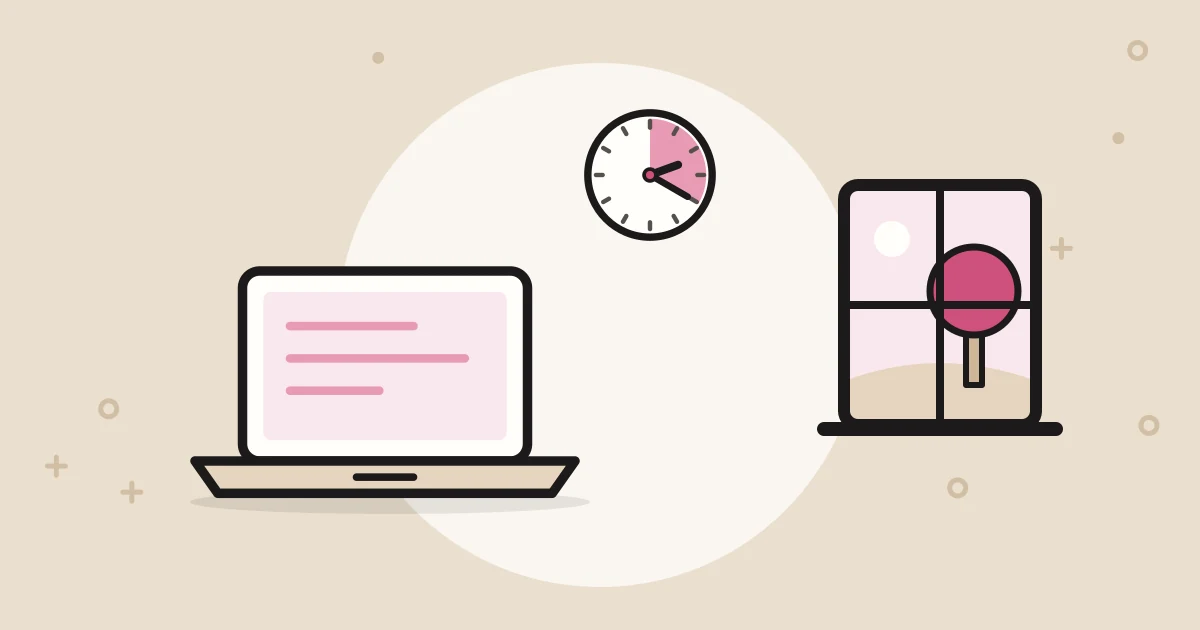
Every 20 minutes, look at something 20 feet away, which is about 6 metres, for 20 seconds.
Looking into the distance lets the focusing muscle relax fully, and the pause gives you time for a few complete blinks. Twenty seconds is roughly how long the muscle needs to let go.
To make it stick:
- set a repeating timer on your phone or computer, or use a break-reminder app
- choose a target: a tree outside the window, or the far end of the office
- link it to things you already do, such as every time you send an email or finish a page
- stand up and stretch at every third break
Set up your screen properly
| What | How |
|---|---|
| Distance | About an arm's length away, 50 to 70 cm |
| Height | The top of the screen at or slightly below eye level, so that you look slightly down |
| Text size | Large enough to read comfortably without leaning in |
| Brightness | Similar to the room. A screen that glows like a lamp is too bright |
| Glare | Place the screen side-on to windows, and use blinds |
| Documents | On a stand beside the screen, not flat on the desk |
| Air | Keep air-conditioning vents and fans from blowing across your face |
Laptops are hard to position well, because the screen and the keyboard are joined. If you work on one all day, raise it on a stand or a pile of books and add a separate keyboard and mouse.
Other habits that help
- Blink on purpose. Now and then, close your eyes fully for a second or two.
- Use lubricating eye drops if your eyes feel dry.
- Drink water through the day.
- Clean your screen and your glasses. Smudges reduce contrast.
- Take real breaks. Scrolling on your phone during a break is not a rest for your eyes.
Phones and tablets
We hold phones closer than any other screen, often only 20 to 30 cm away, which demands the most focusing effort. Hold your phone further away, make the text larger, and do not read on it for long stretches in the dark.
When you need an eye test
If you have tried breaks and a better set-up and still have symptoms, your eyes may need help. Book an eye test if:
- you have headaches or blur at the screen on most days
- you are over 40 and find that neither your distance glasses nor your reading glasses suit the screen
- it has been more than two years since your last test
Tell the optometrist how many hours you spend on screens and how far away they are. Glasses set for your working distance, or multifocals with a good middle zone, can make a large difference. An anti-reflective coating reduces glare from the lenses.
See Better tests eyes at your home or office in Gauteng for R450, and offers eye testing days at workplaces.
Frequently asked questions
What is the 20-20-20 rule?
Every 20 minutes, look at something 20 feet (about 6 metres) away for 20 seconds. It relaxes the focusing muscles in your eyes and reminds you to blink.
Can digital eye strain cause permanent damage?
No. The symptoms are temporary and ease with rest. In children, though, long hours of close work are linked to short-sightedness developing, so breaks and time outdoors matter even more.
How long does digital eye strain last?
Symptoms usually ease within an hour or so of stopping screen work. If your eyes are still sore or your vision is still blurred the next morning, have them checked.
Do computer glasses help with eye strain?
They can, if they have a prescription set for your screen distance. This is especially useful for people over 40. Glasses that only filter blue light, without a prescription, make little difference.
This article is general information and is not a diagnosis or a substitute for an eye examination. If you are worried about your eyes or your sight, see an optometrist or a doctor. Sudden loss of vision, eye injuries and severe eye pain are emergencies.