Why is it harder to read up close after 40? Presbyopia explained
By See Better · Updated · 5 min read
The short answer
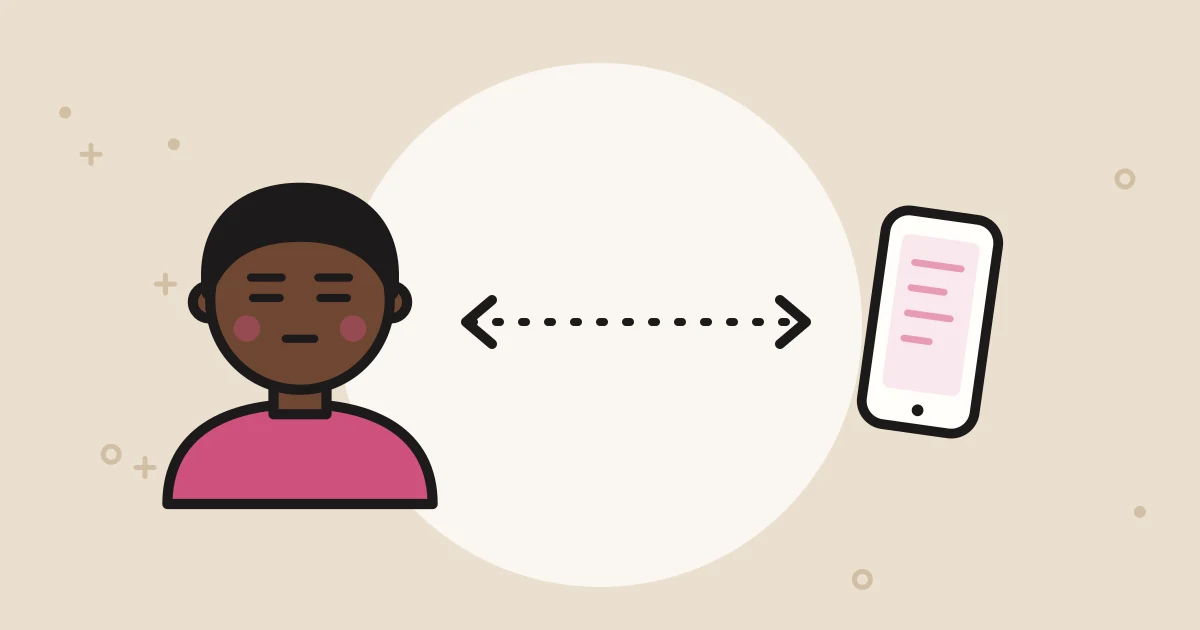
Trouble reading up close after 40 is called presbyopia. The lens inside the eye stiffens with age and can no longer change shape enough to focus on near objects. It happens to everyone, usually from the early to mid 40s, and is corrected with reading glasses, bifocals or multifocal lenses.
Key points
- Presbyopia is a normal part of ageing, not a disease, and it happens to everyone.
- The first signs are holding things further away and needing more light to read.
- It progresses until about 60 to 65 and then levels off.
- Reading glasses, bifocals and multifocals all correct it.
What presbyopia is
Inside each eye, behind the coloured iris, is a clear lens. When you are young the lens is soft and flexible. A ring of muscle changes its shape in an instant, so you can look from the horizon to your phone and both are sharp.
From childhood onwards the lens slowly becomes stiffer. For decades you do not notice, because there is focusing power to spare. Somewhere in your early to mid 40s the reserve runs out, and close objects no longer snap into focus. That is presbyopia. The word comes from the Greek for "old eye", which is harsher than it deserves.
The first signs
- You hold your phone, a menu or a medicine label further away to read it.
- Small print is fine in bright daylight and impossible in a dim restaurant.
- Your eyes feel tired, or you get a headache, after reading or sewing.
- It takes a moment to refocus when you look up from close work.
- You make the font on your phone bigger.
- Threading a needle or reading a price tag has become irritating.
The joke that your arms have become too short is a fairly accurate description.
Who gets it, and when
Everyone. It does not matter whether you have worn glasses all your life or never needed them.
- People with good distance vision notice it at around 42 to 45.
- Long-sighted people often notice it earlier, sometimes in their late 30s.
- Short-sighted people notice it later, because they can take their glasses off and read comfortably without them. With their glasses on, they have the same trouble as everyone else.
Presbyopia then advances gradually, and most people need a stronger reading correction every two to three years. By about 60 to 65 the lens has lost nearly all its flexibility, and the prescription settles.
Your options
| Option | How it works | Good for |
|---|---|---|
| Reading glasses | A single power for close work | People with good distance vision who only need help to read |
| Bifocals | Distance at the top and reading at the bottom, with a visible line | People who want two clear, simple zones |
| Multifocals | A gradual change from distance to reading, with no line | One pair for everything, including screens |
| Computer or office lenses | Set for screen and desk distances | Long hours at a desk |
| Contact lenses | Multifocal designs, or one eye set for near | People who prefer not to wear glasses |
Single vision, bifocal and multifocal lenses compared goes through the lens types, and what strength reading glasses do I need? covers ready-made readers.
Can you prevent or reverse it?
No. Presbyopia is a physical change in the lens, and no exercise, diet or supplement stops it. Wearing reading glasses does not make it worse either. It progresses at the same rate whether you wear them or squint your way through.
What does help is good light. A bright, well-aimed reading lamp makes a real difference, because a smaller pupil gives a sharper image.
Why 40 is the right time for an eye test
It is tempting to pick up a pair of readers at the pharmacy and carry on. For many people that works as a stopgap. But the mid-40s is also when the risk of other eye conditions, such as glaucoma, begins to climb, and those do not announce themselves.
An eye test at this stage does two things. It gives you the exact reading power for each eye, which is often not the same for both. And it gives your optometrist a baseline for the health of your eyes that future tests can be compared with. If your near vision changes suddenly, or in one eye only, do not put it down to age. Have it checked.
See Better tests your eyes at home in Gauteng for R450. Complete glasses, including the test, a frame and tinted lenses, cost R1199 with single vision reading lenses and R2099 with multifocals.
Frequently asked questions
At what age does presbyopia start?
Most people notice it between 40 and 45. Long-sighted people may notice it a few years earlier, and short-sighted people a few years later.
Is presbyopia the same as long-sightedness?
No. Long-sightedness is caused by the shape of the eye and is present from childhood. Presbyopia is caused by the lens stiffening with age. Both are corrected with plus lenses, which is why they are often confused.
Will my eyes keep getting worse?
Your near focus will keep weakening gradually until about 60 to 65, and then it levels off. Expect to update your reading prescription every two to three years until then.
Do I need glasses all the time once I have presbyopia?
Not necessarily. If your distance vision is good, you only need glasses for close work. If you also need a distance correction, multifocals let you wear one pair all day.
This article is general information and is not a diagnosis or a substitute for an eye examination. If you are worried about your eyes or your sight, see an optometrist or a doctor. Sudden loss of vision, eye injuries and severe eye pain are emergencies.